Project Brief
A new restaurant is being launched with a highly personalised menu which caters to the customers’ unique health considerations and preferences.
Task at hand
Create IA and design the sitemap for the website’s MVP version, focusing mainly on its online food customisation and ordering system.
Restaurant Concept
Name: Swaadanusar (translates to as per taste)
Food & drink: Authentic Bengali food
Elevator pitch: Discover Bengal's culinary heritage at Swaadanusar, where each dish is a personalized journey. Our menu caters to your unique preferences. Crafted especially for seniors, our customisations ensure a delightful, health-conscious dining experience at the convenience of your home.
Menu & customisations:
Soups
- Tomato
- Chicken
- Corn & veggies
- Lentil
Rice & bread
- Plain steam rice
- Jeera rice
- Pulao
- Chapati
- Parantha
- Cheela
Vegetarian mains
- Gravy
- Yellow dal
- Dal tadka
- Matar paneer
- Dum aloo
- Dry
- Fry – Paneer, aloo, eggplant
- Mix vegetable
- Aloo beans
- Saag (seasonal)
Non-vegetarian mains
- Gravy
- Chicken veggie broth
- Chicken masala
- Fish in mustard sauce
- Fish curry
- Dry
- Fried chicken
- Fried fish
- Tawa chicken
- Fish with lemon-pepper
Sides & condiments
- Chutney
- Tomato
- Aam papad
- Mint-coriander
- Salad
- Vegetable
- Fruit
- Raita
- Boondi
- Vegetable
- Jeera
Beverages
- Fresh lime/Shikanji
- Fresh juice of the day
- Chhaachh
- Jal jeera
Location: Hooghly (in West Bengal), India
Neighbourhood: Chinsurah (delivery radius)
Main target audience: Seniors, especially those requiring customisations for health and medical reasons.
Cost: Budget-friendly, INR 50-400 per item
- Non-vegetarian items will be slightly more expensive.
- High-customisation orders will be charged extra.
Please note:
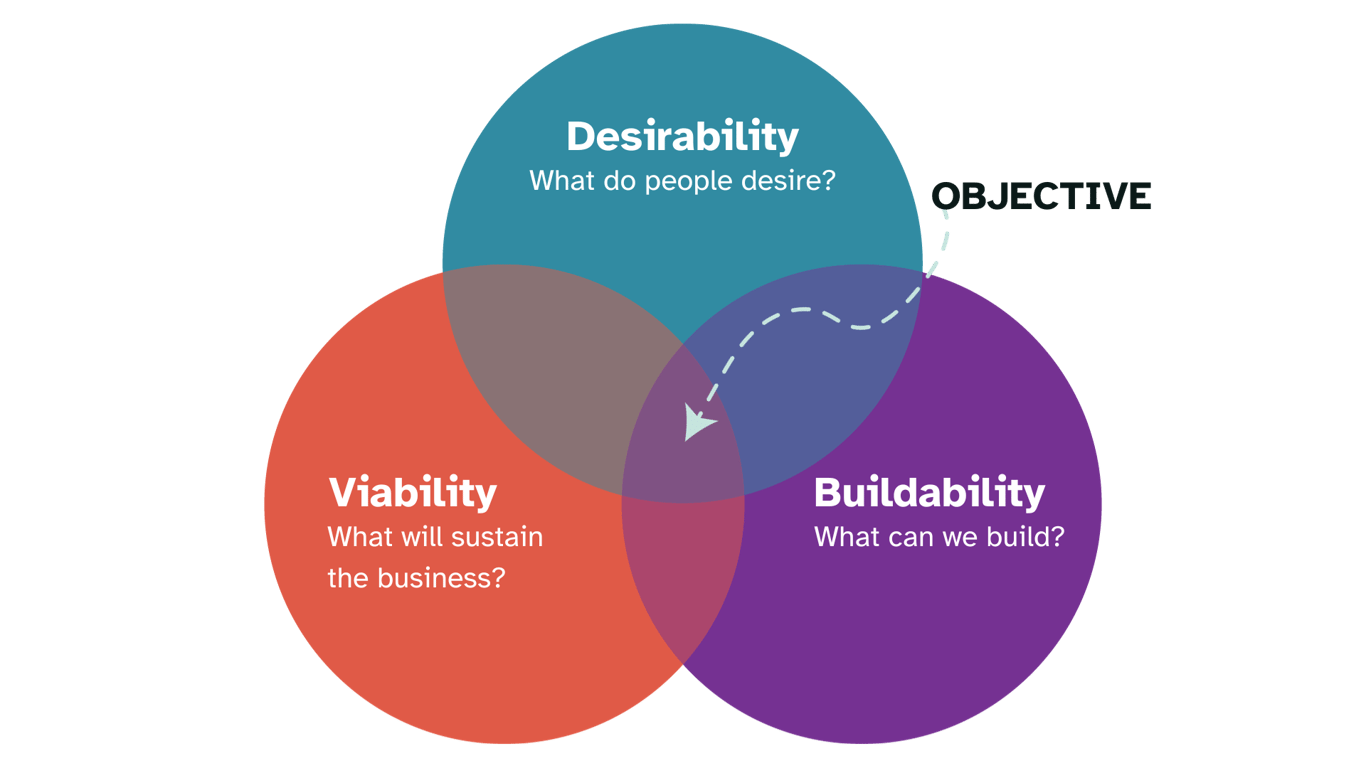
- I begin any IA by understanding the user, client, and their needs. Had this been a real project, I’d also have considered the tech constraints.
Strategy
Target Audience
The website/app will focus on the following target audiences:
Roles (groups of people with similar goals)
- Elderly couples, men and women with health concerns ordering for themselves
- Young to middle-aged children of older audlts who’d order on their parents’ behalf
Audience 1: Older adults
Demographics
- Gender – 60% men, 40% women
- Education – School education or higher
- Occupations – Retired professionals, homemakers
- Age – 60-90 years
- Marital status – Married, widowed
- Income – Limited budget; Family pension or savings of up to INR 30,000 per month (average)
- Location – Chinsurah, Hooghly
Psychographics
- Personality & Attitudes: Health-conscious, reluctance to try new things (stay in the safety/familiar zone)
- Values: Moderately conservative, family-oriented, religious
- Interests & Lifestyles: Family/community, indoor recreational activities, traditional Bengali lifestyle
Audience 2: Young to middle-aged
Demographics
- Gender – 70% men, 30% women
- Education – College education or higher
- Occupations –Working in the private/public sector as bankers, IT professionals, business owners
- Age – 40-60 years
- Marital status – Married, Engaged, Single
- Income – INR 60,000 to 1,50,000 per month
- Location – Primary: Chinsurah, Hooghly; Secondary: Pan India (relocated)
Psychographics
- Personality & Attitudes: Professional, modern, outgoing
- Values: Family-oriented, liberal
- Interests & Lifestyles: Family/community, goes out to eat, takes vacations
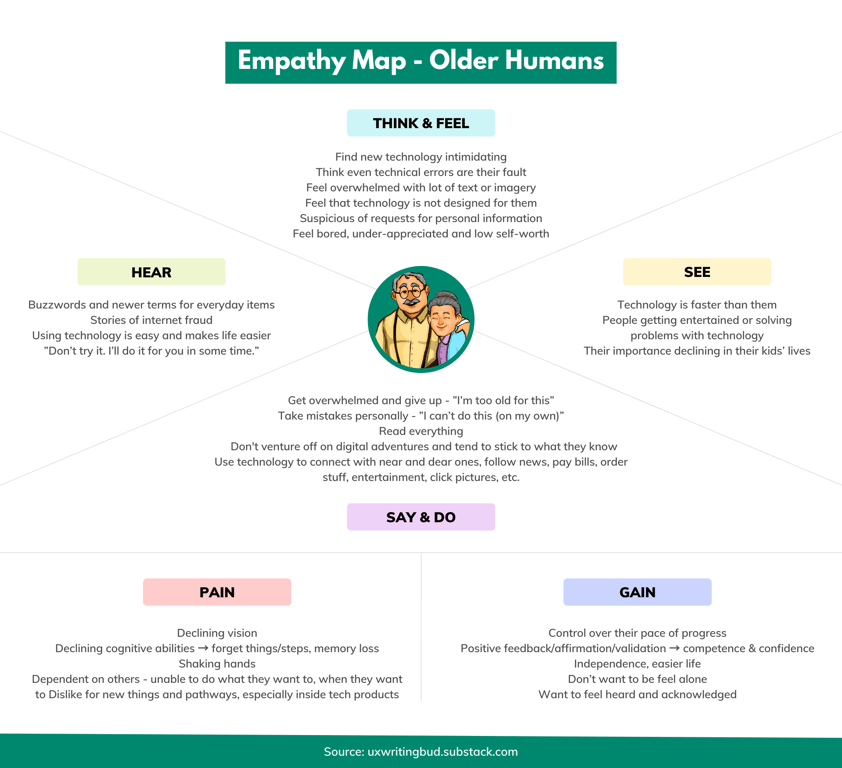
I skipped empathy maps as psychographics are sufficient at this stage.
An empathy map for older adults created in the past
User Needs
The website needs to enable the user to:
- Find out if the restaurant delivers to their area
- Order food online via the website’s native functionality or chatbot
- Accessibility functionality and simplicity to accommodate old-age-related challenges
- Customise their food order and remember the customisations for future
- Suggest customisations or filter food items based on health concerns
- Estimate the price of the order and delivery time
- See past order history
- Create recurring orders based on set customisations (subscription)
- Contact someone with questions or issues with an order
- Provide an equally good mobile experience either via an app, mobile site, or WhatsApp
Client Needs
The website needs to enable the client to:
- To sell food online that will be delivered
- Provide a system for order customisation
- Appear trustworthy, fresh/clean, and authentic
- Communicate reliability and commitment to meeting nutritional demands/restrictions
- Communicate authenticity, affordability and fast delivery
- Communicate the approximate nutritional value of each dish and quantity of ingredients
- Explain the process of customisation to those who have never tried it
- Explain how repeat orders and subscriptions work
- Gather feedback from the users and build a loyal customer base
Outline of Scope
I turn the need statements into tangible, actionable requirements and segregate them into 2 categories:
- Content requirements: things that a user would be looking for
- Functional requirements: activities that a user would be performing
Content Requirements
- Branding – Logo, about us content
- Policies – Pricing, delivery, privacy
- Authenticity – Customer reviews, nutritional information, customisation guide
- Ordering – Food images, dish description, delivery time, opening and closing time, pricing
- Troubleshooting – FAQs, contact information
Functionality Requirements
- Order online → online ordering system – Ordering form, check out process, repeat order, order history, subscription system, delivery radius checker, order estimation (price and time)
- Order as a guest (elderly folks often struggle to remember passwords)
- Filter and sort items as per their preferences → Filtering and sorting
- Save items for later → Favouriting system
- Create their account → User authentication, Account creation system, Password recovery
- Customise their order → Customisation history, Order customisation system
- Leave feedback → Feedback system
- Place order in multiple ways → Accessibility – chatbot/live chat, order via voice command, call
Card Sorting & Conceptual Modelling
I will now write down the different concepts, requirements and their elements on cards and arrange them into groups
Please note:
- I usually conduct a card sorting exercise at this stage, where I ask a group of users to organise concepts into groups to understand their mental models. However, this project was (a) fictional, and (b) rather simple, so I didn’t include it in the process.
- For complex projects, I also create a conceptual model (inspired by Sophia Prater’s OOUX and ORCA process) to represent the key concepts of the system and how they relate to one another. I’m working on a similar project and will soon add it to my portfolio.
Sitemap
Next steps: Tree testing, Taxonomy, Usability testing of Lo-fi prototypes
Please note:
- At this stage, I also conduct a tree test with a bunch of users to validate and refine structural decisions and understand the findability of particular topics. However, due to the project’s simplicity, I skipped it here.
- Taxonomy: I’d define the list of terms, including system categories and labels that affect the findability of the information, and share that with the team.
- Usability testing: Once lo-fi prototypes are ready, I test the findability and understandability of the IA with real users.
 Made with Bullet